Things to Do in Cambodia
Three-dollar noodle soup and sunrise over Angkor Wat
Top Things to Do in Cambodia
Find activities and tours you'll actually want to do. Book through our partners -- no booking fees.

Plan Your Trip
Essential guides for timing and budgeting
Climate Guide
Best times to visit based on weather and events
View guide →Day Trips
The best excursions and nearby destinations worth the journey
Explore day trips →Where to Stay
Best neighbourhoods, hotel picks, and booking tips
Find hotels →Travel Insurance
What's required, what coverage matters, and how to get a quote
Read guide →What to Pack
Climate-specific gear, essentials, and what to leave at home
See packing list →When Should You Visit Cambodia?
Tap a month for weather, crowds, and highlights
View full year-round climate guide →

Your Guide to Cambodia
About Cambodia
Cambodia greets you with fish sauce, not incense. At 6 AM outside Phnom Penh's Central Market, the wok sizzles and the scent clings to your shirt. Motorbikes weave between tuk-tuks on Russian Boulevard. Monks in saffron robes glide along the Tonlé Sap riverfront collecting alms. Hammers echo from Street 178 where silver artisans shape bracelets the same way their grandfathers did.
Pub Street in Siem Reap glows neon against monsoon puddles. Lemongrass smoke drifts from the night market. One plate of grilled beef lok lak costs 12,000 riel ($3). The temples of Angkor are more than stone. Cicadas scream in the pre-dawn dark at Angkor Wat. Moss softens the steps at Ta Prohm where tree roots coil around bas-reliefs like slow-motion serpents.
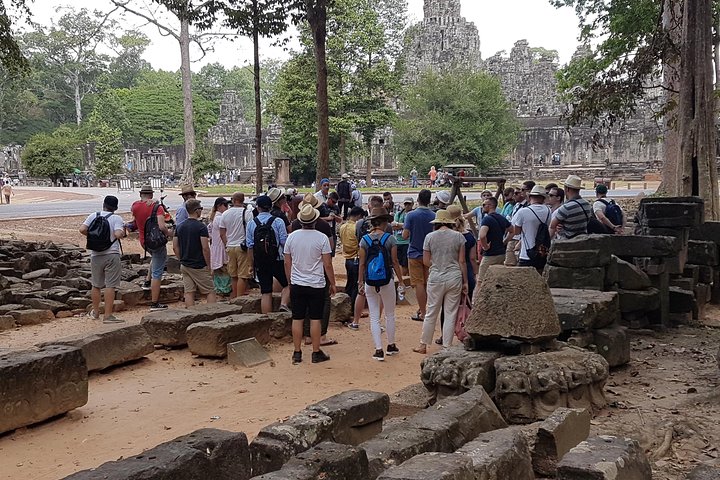
Bayon's 216 stone faces catch the first gold light of morning. Brutalist 1960s blocks stand beside ochre and mint French colonial shophouses in Battambang. Cambodia carries its Khmer Rouge history without letting it define the present. Three hours on the $8 bus from Phnom Penh to Siem Reap. $15 buys a guesthouse room with fan and cold shower.
Resilience is a morning coffee ritual. It's a rebuilt pagoda. It's a street vendor who lost everything and still smiles when you try Khmer.
Travel Tips
Transportation: Download Grab before wheels touch tarmac. Tuk-tuk drivers at Phnom Penh airport quote $10 for 5 km; Grab charges $2.50. Capitol Tour buses run between cities for $8-12. Book a day ahead during Khmer New Year when locals increase home. Siem Reap sunrise by bicycle costs $2 per day. Motorcycle taxis charge $15 roundtrip and lock you to their clock.
Money: Cambodia runs on US dollars above $5. Keep riel for street food and temple donations. ATMs spit USD in $50 notes. Break them at mini-marts before hitting markets. Tipping is not expected. Round a $1.50 tuk-tuk ride up to $2 and watch the smile widen. Credit cards work at mid-range spots. Bring cash for the $37 Angkor pass. They only accept bills.
Cultural Respect: Cover shoulders and knees at temples. Buy a krama scarf for $3 at any market. Skip the overpriced temple stalls. Remove shoes before entering homes and some pagodas. Watch for the pile outside. Never point feet at Buddha statues. Do not touch anyone's head, even children. Khmer New Year in mid-April means street water fights. Embrace the splash or stay indoors.
Food Safety: Follow the local queue. The woman grilling beef skewers in front of Royal Palace has ruled her spot for 20 years. Ice is safe in cities. Skip it in rural areas. Street-side fruit shakes are fine if blended fresh. Avoid pre-made cups sweating in plastic. The $1.50 noodle soup cart on Street 13 might be your best meal. Pack rehydration salts anyway.
When to Visit
November through February is Cambodia's window. Temperatures linger at 28°C (82°F) with little rain. Temples become bearable. Beaches turn pleasant. Hotel prices increase 50-60% during peak season. Siem Reap guesthouses jump from $15 to $35 around Christmas. March kicks off hot season. Thermometers hit 35°C (95°F). The air feels like wet wool.
April brings 40°C (104°F) and Khmer New Year water wars. Fun, but draining. May through October unleashes monsoon rains. Mornings stay clear. Afternoons explode into storms. Phnom Penh streets flood within minutes. The upside? Hotel prices drop 40%. Angkor Wat mirrors itself in empty moats. June and July drench hardest.
Bring a real rain jacket, not a flimsy poncho. August surprises. Fewer tourists. Rice paddies glow green. Tonlé Sap lake swells to its highest. September stays wet yet workable. October dries out with shoulder-season prices. Koh Rong beaches stay decent through April. Sihanoukville turns rough during monsoon. Budget travelers should aim for May or September. Rooms fall to $8-10. Temples feel private. Start early to dodge afternoon storms.
More Ways to Experience Cambodia
Tours, day trips, and local experiences curated by on-the-ground operators.
Didn't see anything interesting yet?
Browse Viator's full catalog of tours, day trips, food experiences, and private guides in Cambodia.
See All Cambodia Tours on Viator